Beatles Reunion Song Myths #1: George Martin declined to produce the sessions due to his hearing.
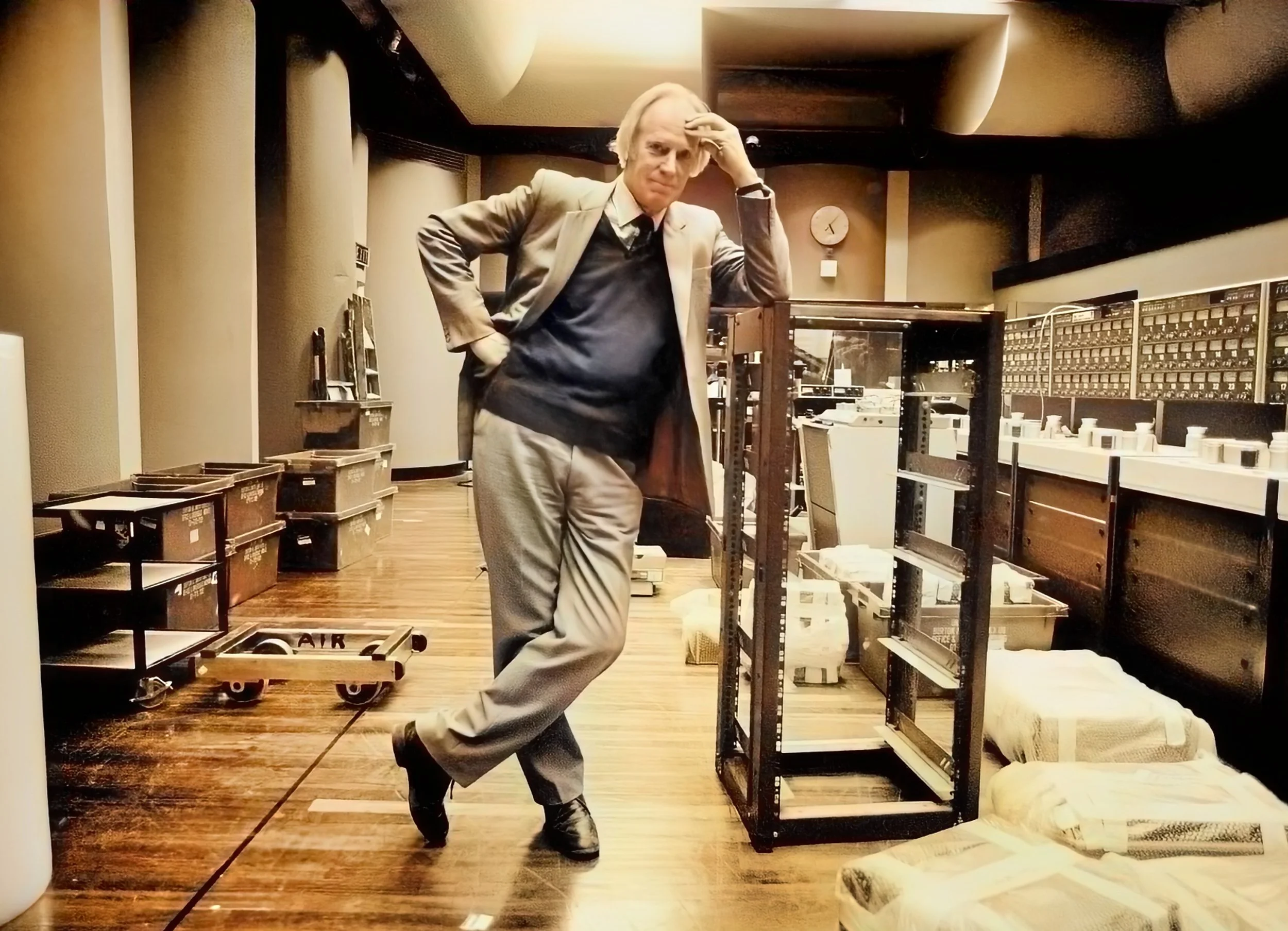
George Martin
Editor’s note: This is the first in a series looking at myths surrounding the Beatles ‘90s ‘reunion’ songs.
Sir George Martin produced almost all of the Beatles’ oeuvre. However, he did not produce the group’s ‘90s ‘reunion’ songs. The company line at the time was that Martin declined to produce the songs due to his failing hearing. This belief has persisted to the present, referenced on the Wikipedia page for the song ‘Free As A Bird’ as of December 2025. However, it is not true.
Martin to produce?
As late as mid-January 1994, Martin seemed to be working under the assumption that he would be producing the new music. This was just weeks before Paul McCartney, George Harrison, and Ringo Starr – the Threetles as the press dubbed them – entered the studio to record ‘Free As A Bird’ based off John Lennon’s home demos. Intriguingly, Martin also had the impression that McCartney and Harrison were planning to write songs together.
"What will happen is that George and Paul will work out material," Martin said. “I never go into the studio without knowing what I'm going to do beforehand. And before they go into the studio, I make sure the songs are going to be pretty good.”[1]
Martin continued, “George and Paul will have to work on material to begin with, because they are the writers, rather than Ringo. Then they'll get together, and we'll do something. I know Paul and George have been talking, but I don't think they've actually written anything yet."[2]
Martin might have been thinking that he would produce the new songs for a very simple reason. McCartney wanted him to.
“I was originally keen to have George do it because he'd done the rest of the Anthology,” McCartney said. “I thought it might be a bit insulting to not ask him to do this.”[3]
McCartney said that Martin declined
Once Martin learned of the trio’s plan to work with John Lennon’s home demos, he had some reservations.
“I kind of told them I wasn’t too happy with putting them together with the dead John,” Martin said. “I’ve got nothing wrong with dead John, but the idea of having dead John with live Paul and Ringo and George to form a group, it didn't appeal to me too much.”[4] However, that wasn’t the reason that Martin didn’t ultimately produce the songs.
McCartney put forward that Martin declined due to his hearing.
“George doesn’t want to produce much anymore ’cause his hearing’s not as good as it used to be,” McCartney said in 1995. “He’s a very sensible guy, and he says [plummy voice] ‘Look, Paul, I like to do proper job,’ and if he doesn’t feel he’s up to it, he won’t do it. It’s very noble of him, actually. More people would take the money and run.” [5]
Elsewhere, McCartney gave the same explanation. “George himself is backing out of production because of his hearing,” McCartney said. “…He being that much older [than I am] – and on the point of retiring really – I don't think he would have been that keen. I talked to him about various things and he said, ‘Oh Paul, you don't want me to produce; get someone else. My hearing's not as good as it was.’” [6]
Martin said that he was never asked
While McCartney said that Martin declined to produce the songs, Martin himself insisted that he was never asked.
"But I'm not at all unhappy about it,” Martin said in 1995. “I mean, the Beatles are very good record producers, and they don't need me anymore. They wanted to keep this project down to themselves as much as possible. I knew about it, I knew it was happening, and there was no rancor about it. In any case, I'm now quite old [Martin was 69 at the time], and I don't want to spend the rest of my life in the recording studio. It takes too long to do things now, and there are so many other things I'd rather be doing.”[7]
At the press conference launching the Beatles Anthology on November 20, 1995, Martin provided some additional context. “Having heard it now, I wish I had produced it because if anything, it would have given me thirty number ones instead of 29,” he said. “I've been working on Anthology 1 all year, and if I had to choose between working on the single or the album, I'd have chosen Anthology, because it's the bigger one."[8] (Editor’s Note: ‘Free As A Bird’ did not ultimately reach number one.)
However, Martin was not actually given a choice. In 1998, Martin said of working on the reunion songs, “I think I might have done it if they asked me, but they didn’t ask me.”[4]
At that time, Martin did note that his hearing was failing. “My hearing has been going,” he said. “…Giles (Martin’s son) has been very helpful to me. He’s been my right arm and my ears as well.”[4]
Harrison wanted Lynne
According to McCartney, George Harrison expressed concern about Martin’s hearing.
“George Harrison was keen to make sure we had someone really current with ears,” McCartney said.[3]
Elsewhere, McCartney said, “George Harrison brought up the fact that George Martin’s hearing wasn’t as good as it was. So George Martin was okay on all the old stuff. But perhaps for new stuff it required someone who’s hearing was 100 percent. I would say, ‘Well, it doesn’t really matter: the engineer will be the ears, George will be the producer.’”[9]
Harrison, however, wanted Lynne to produce the songs. He had worked with Lynne on Harrison’s 1987 album Cloud Nine. Lynne was also part of the Traveling Wilburys with Harrison.
“George Harrison wanted Jeff Lynne,” McCartney said.[9]
There might be some inclination to believe that Harrison wanted Lynne because of old slights by Martin. Martin did, of course, say that Harrison’s early work was “rubbish.”[10] However, there’s no indication that Harrison was concerned with anything beyond Martin’s hearing.
Ultimately choosing Lynne as producer over Martin appears to have been a concession by McCartney to Harrison. In a 1995 interview, the interviewer said, “…there seems to be the scenario of: we’re using your choice of studio so we’re using my choice of producer, your choice of engineer, my choice of art director, your choice of press agent, and so on.” McCartney responded, “Yes, that’s true. You have to do that.”[11]
Bottom line, the Threetles went with Lynne as producer for the ‘90s reunion sessions because Harrison wanted him. It was not because Martin declined due to his hearing.
Follow along on Facebook and Instagram.
REFERNENCES
[1] Don’t let it be just yet. London Evening Standard. January 14, 1994, p45.
[2] Wigg, David. Rebirth of the Beatles. Daily Express. January 22, 1994. p.21.
[3] Snow, Mat. Paul McCartney. Mojo. November 1995.
[4] Sharp, Ken. The last hurrah of the fifth Beatle. Goldmine. Vol.24, No. 23. Issue #477. November 6, 1998. p.18
[5] McCartney interview. Bass Player. July/August 1995.
[6] Snow, Mat. Paul McCartney. Mojo. November 1995.
[7] Cunningham, Mark. The Story Of The Beatles' Anthology Project. Sound On Sound. December 1995.
[8] Davis, Andy. Beatles ’96. The Beatles Book. January 1996. #237. p.33.
[9] Kozinn, Alan. The Inside Story on the Film, Album and Reunion: McCartney on the 'Anthology.' Beatlefan. #97. Vol. 17. No. 1. Nov-Dec 1995.
[10] Sharp, Ken. The last hurrah of the fifth Beatle. Goldmine. November 6, 1998.
[11] Baker, Geoff and Lewisohn, Mark. The Beatles Story. Club Sandwich. Winter 1995, No. 76. p.5.