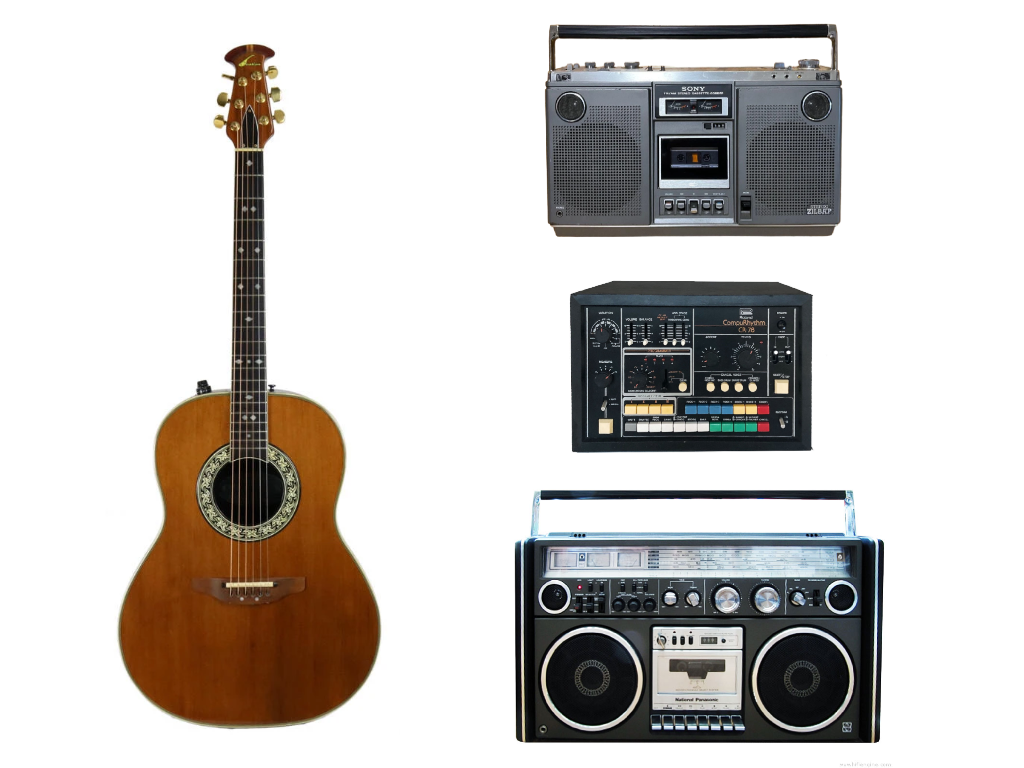
Here, I detail the instruments and recording equipment that John Lennon used while in Bermuda in June and July of 1980. I also provide detailed background about the equipment and information about Lennon’s setup in Bermuda.
Ovation Legend Ltd. 1651 guitar
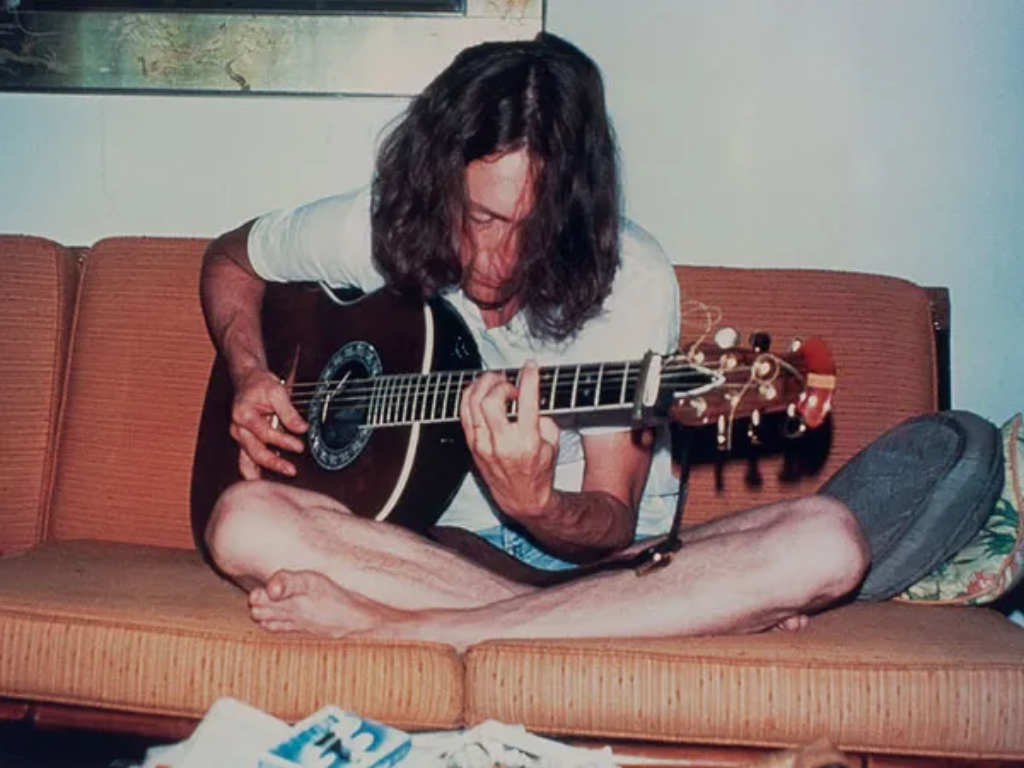
John Lennon in Bermuda playing Ovation Legend Ltd. 1651 © Yoko Ono
John Lennon had his assistant, Fred Seaman, bring his Ovation Legend Ltd. 1651 guitar from New York to Bermuda. “He instructed me to bring his favorite Ovation acoustic guitar,” Seaman wrote.[1]
Seaman arrived with the guitar June 13th.[2] This was two days after Lennon arrived on the Megan Jaye, the sailboat he took from Newport, Rhode Island to Bermuda. Lennon would use this guitar throughout his time in Bermuda as well as during the Double Fantasy sessions. It subsequently became known by Ovation lovers as the ‘John Lennon model.’
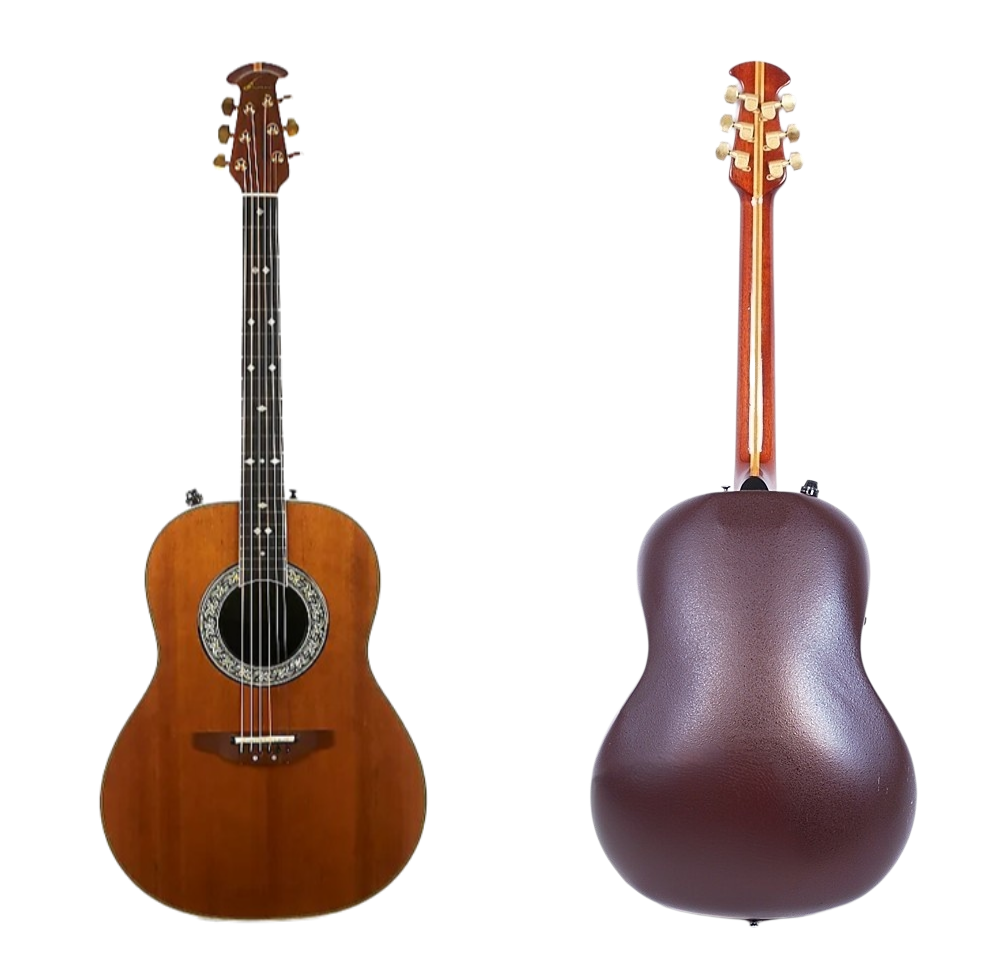
History of the Legend Ltd. 1651
The Ovation Legend Ltd. 1651 guitar was first listed in the Ovation catalog starting in the fourth quarter of 1978. It is not listed in a June 1, 1978 U.S. price listing from Ovation. An October 1st 1978 Ovation price guide lists the 1651’s retail price as $675. According to the U.S. Bureau of Labor Statistics, this would equate to approximately $3,389 today.
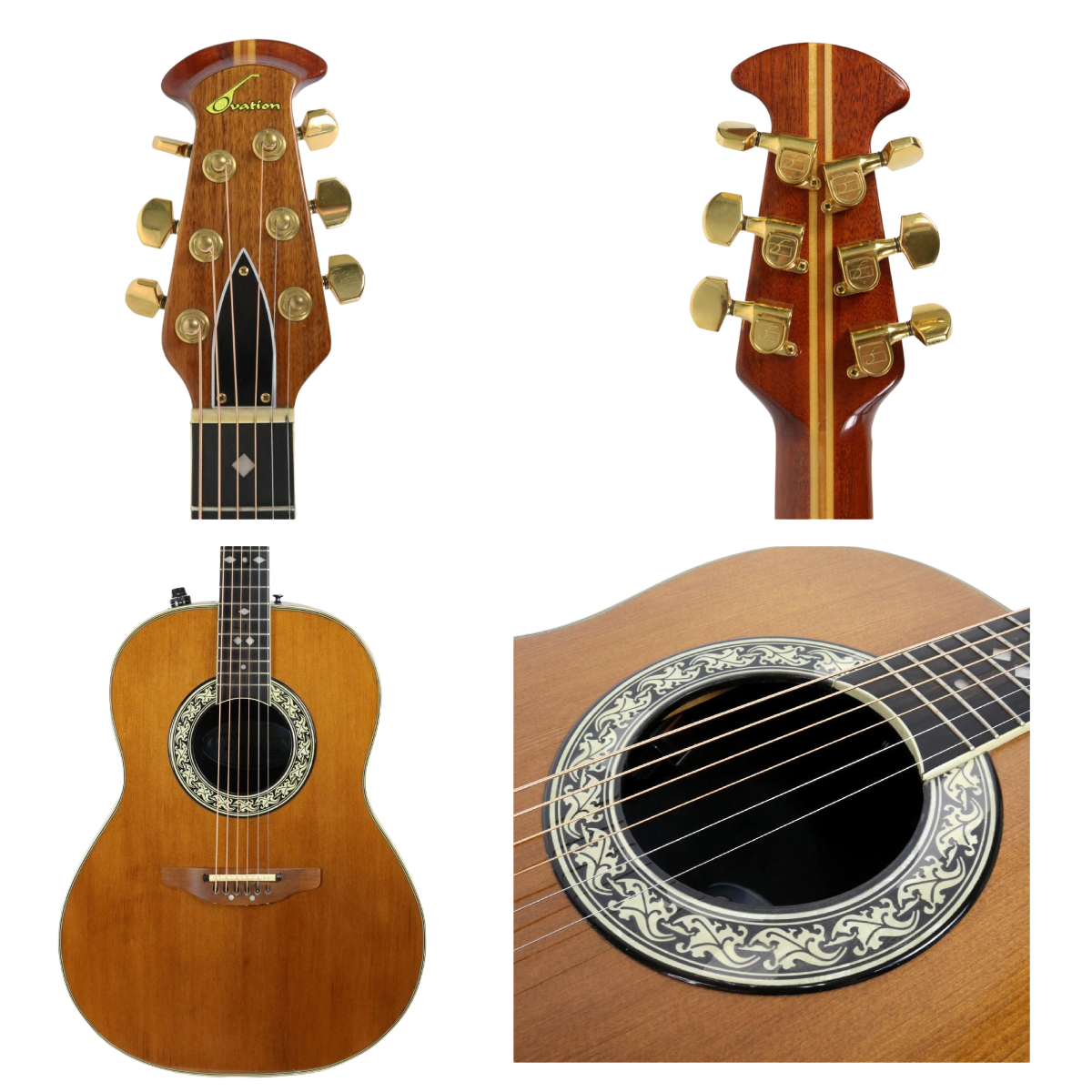
This model is often referred to simply as the Ovation Legend Ltd or Ovation Legend Ltd. 1651. The price listing lists it as Ovation Legend Ltd. 1651-7, with the -7 corresponding to the nutmeg finish, though it was not available in any other color. This guitar was sold from late 1978 through 1985. (It is not contained in 1986 product catalogs.)
Design
The Legend Ltd. 1651 was only available in an acoustic electric model with a nutmeg gloss finish and was made in the U.S. (Connecticut). It combined elements of Ovation’s Custom Legend and Legend series.
The Legend Ltd. 1651 featured a Sitka spruce top, a deep bowled fiberglass body, an ebony fretboard with ivory binding, pearl diamond-shaped inlays, a scale length of 25 ¼, a walnut bridge, and 24K gold plated tuners. It had a large, single ring “leaf” rosette.
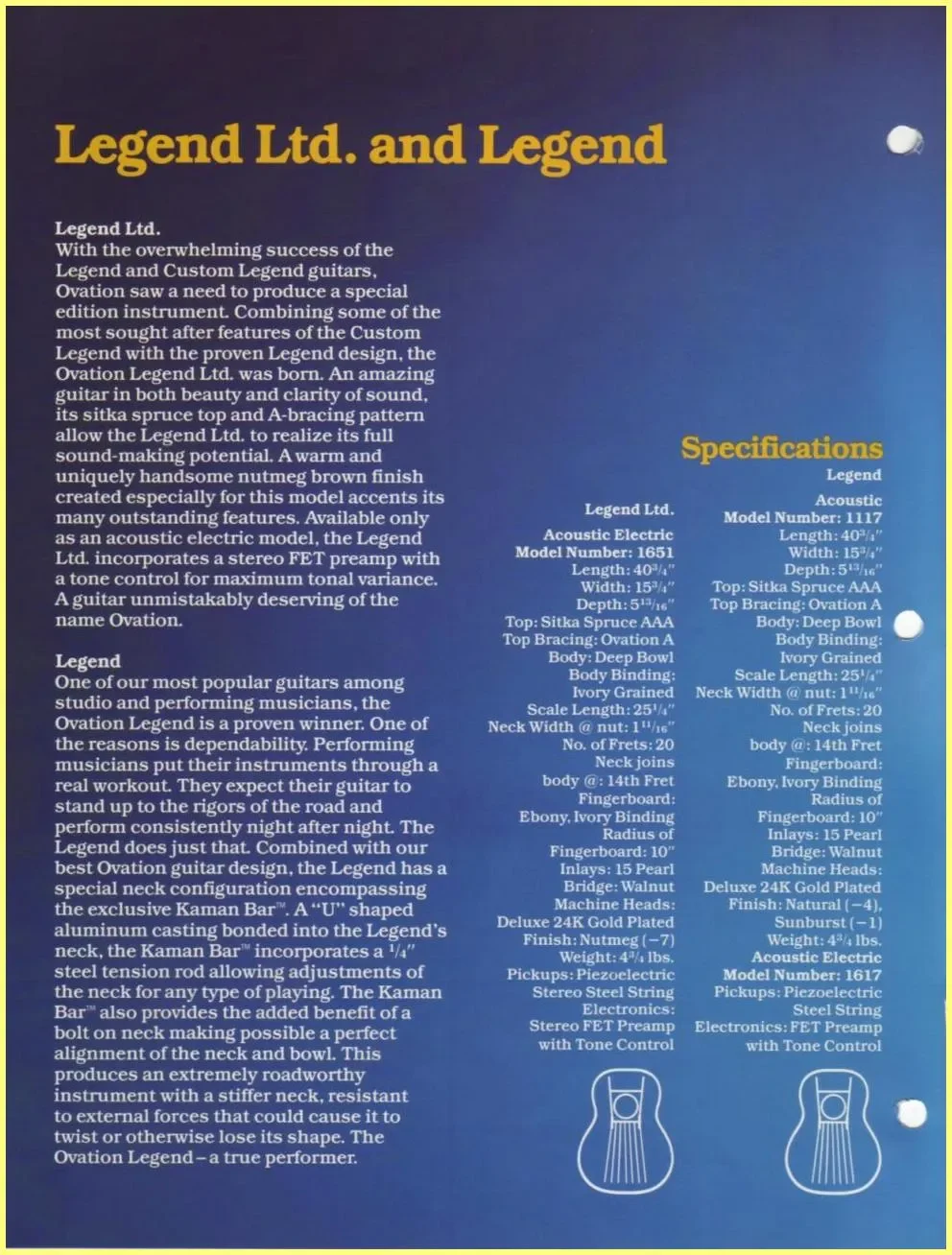
The 1980 U.S. Ovation Acoustic/Acoustic Electric Catalog described the guitar as follows:
With the overwhelming success of the Legend and Custom Legend guitars, Ovation saw a need to produce a special edition instrument. Combining some of the most sought after features of the Custom Legend with the proven Legend design, the Ovation Legend Ltd. was born. An amazing guitar in both beauty and clarity of sound, its Sitka spruce top and A-bracing pattern allow the Legend Ltd. to realize its full sound-making potential. A warm and uniquely handsome nutmeg brown finish created especially for this model accents its many outstanding features. Available only as an acoustic electric model, the Legend Ltd. incorporates a stereo FET preamp with a tone control for maximum tonal variance. A guitar unmistakably deserving of the name Ovation.
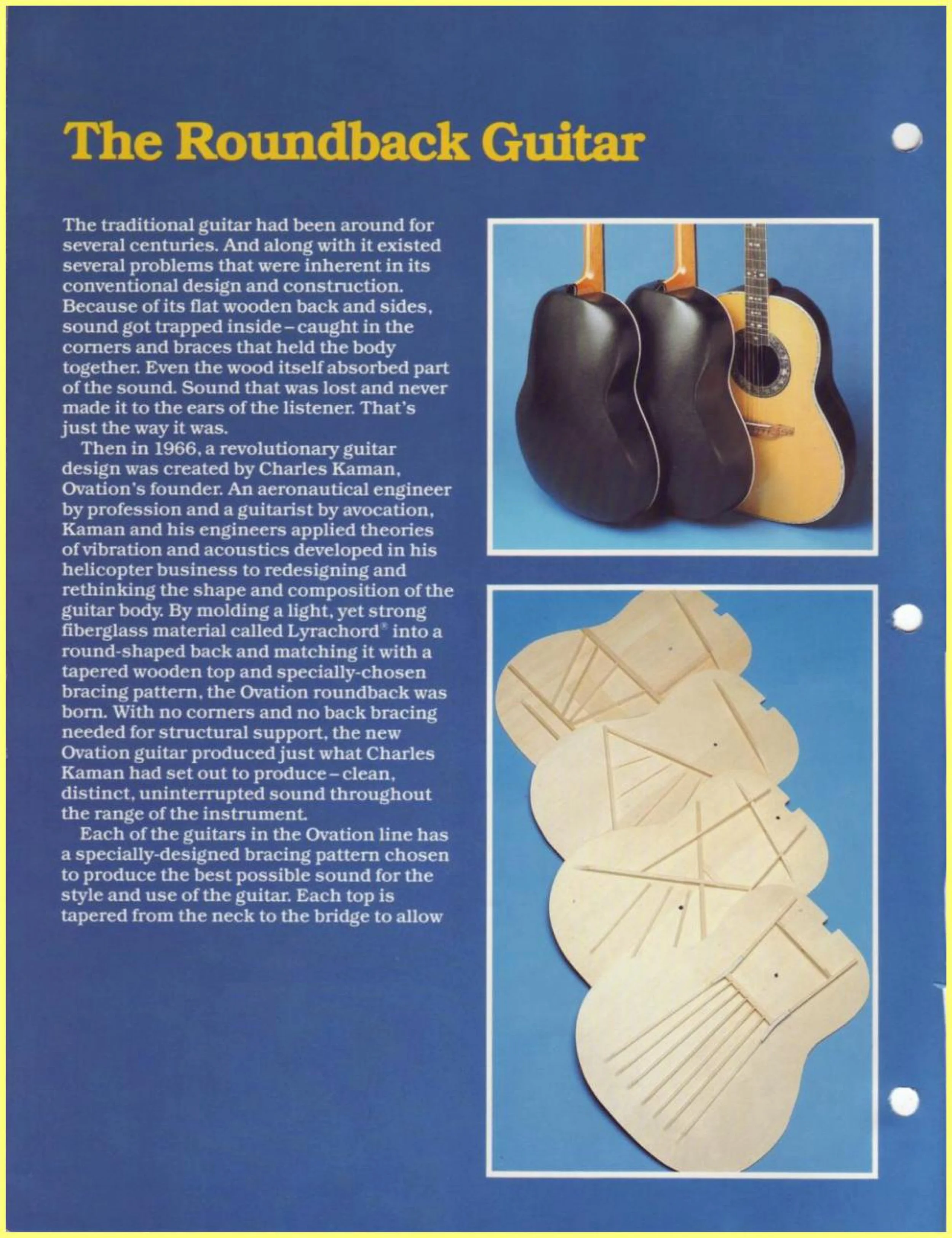
This same catalog discussed the roundback design of the 1651 and other Ovation guitars.
The traditional guitar had been around for several centuries. And along with it existed several problems that were inherent in its conventional design and construction. Because of its flat wooden back and sides, sound got trapped inside – caught in the corners and braces that held the body together. Even the wood itself absorbed part of the sound. Sound that was lost and never made it to the ears of the listener. That's just the way it was.
Then in 1966, a revolutionary guitar design was created by Charles Kaman, Ovation's founder. An aeronautical engineer by profession and a guitarist by avocation, Kaman and his engineers applied theories of vibration and acoustics developed in his helicopter business to redesigning and rethinking the shape and composition of the guitar body. By molding a light, yet strong fiberglass material called Lyrachord into a round-shaped back and matching it with a tapered wooden top and specially-chosen bracing pattern, the Ovation roundback was born. With no corners and no back bracing needed for structural support, the new Ovation guitar produced just what Charles Kaman had set out to produce – clean, distinct, uninterrupted sound throughout the range of the instrument.
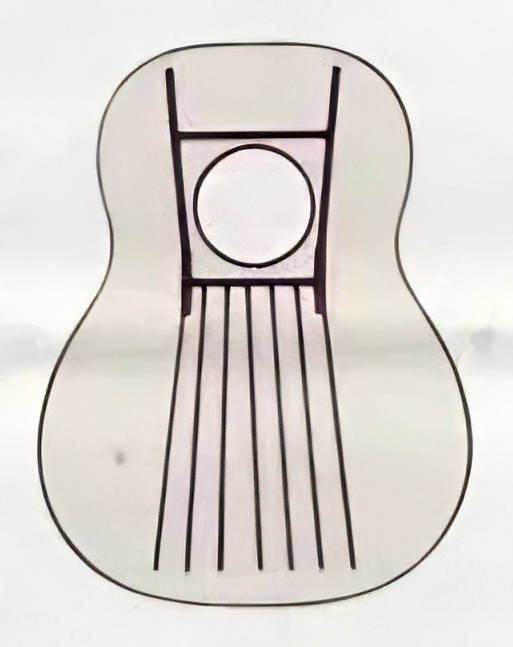
A-bracing pattern of Ovation Legend Ltd. 1651
As noted above, the Ovation Legend Ltd. 1651 used an A-bracing pattern. This and the rounded fiberglass back meant that there were no back braces needed for structural support, further enhancing sound. A 1979 Ovation document stated, “This pattern gives the top strength, while offering magnificent resonance. Why? Because the bracing supports run with the grain. This increase in top flexibility creates a deeper bass response and more efficient midrange.”[3]
Electronics
The Ovation Legend Ltd. 1651’s electronics were distinctive. Lennon is known to have loved electronic gadgetry.[4] The Ovation Legend Ltd. 1651 certainly had its fair share.
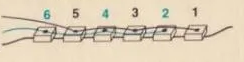
Diagram of pickups
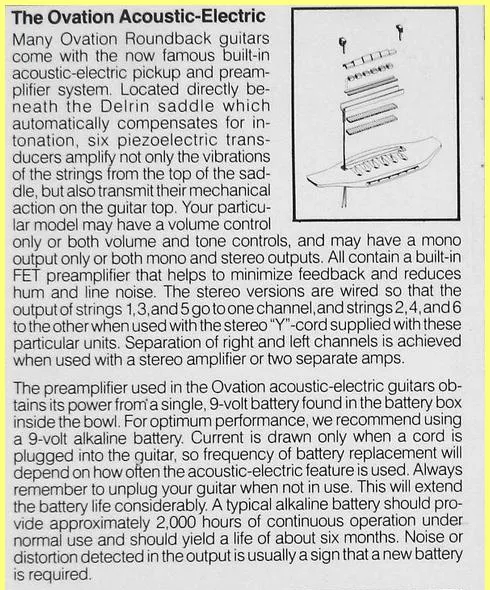
It had six piezoelectric pickups directly beneath the saddle. A 1980s Ovation document stated, “Ovation's pickup system consist of 6 individual piezo-electric crystals (transducers), one per string, which picks up the vibration of the string and top (mechanical signal) and relays that acoustic sound as an electronic signal to the pre-amp for strengthening and tonal modification.”[5] The stereo pickup system had outputs for the 1st, 3rd, and 5th strings that were separate from the 2nd, 4th, and 6th strings.
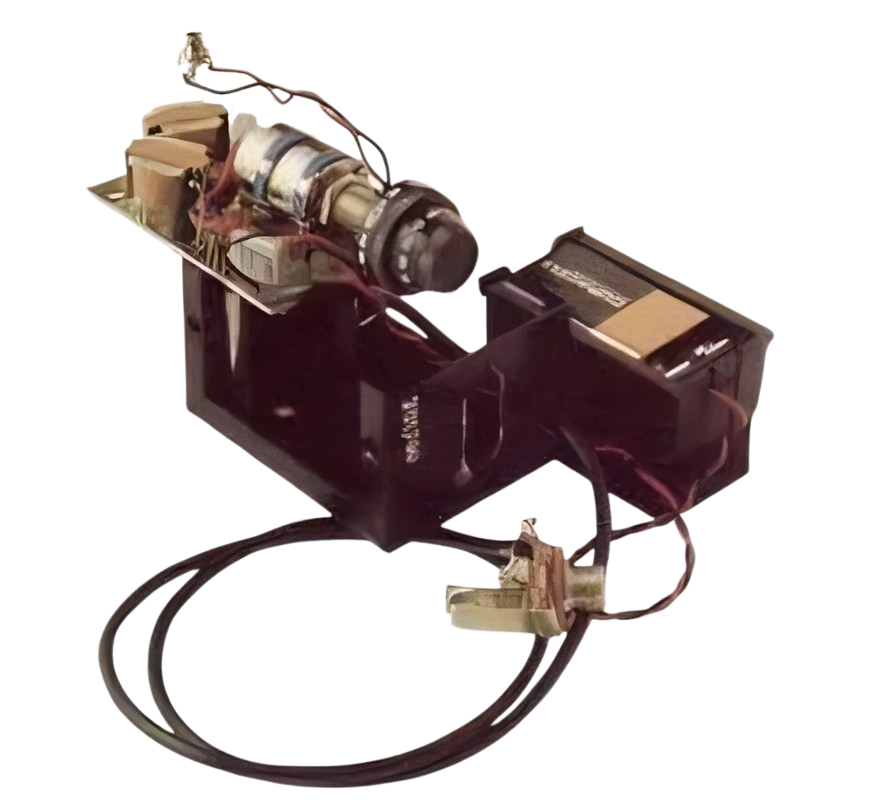
FET preamplifier of Ovation Legend Ltd. 1651
The 1651’s pickups were connected to two Field Effect Transistor (FET) preamps. The 1980 catalog states, “Built into the preamp are two filters to keep out unwanted noise and frequencies and to control feedback. What you hear is a full, balanced sound in all ranges – bright highs, deep lows and a solid midrange.” The preamps were powered by a nine volt battery located in a box inside the bowl.
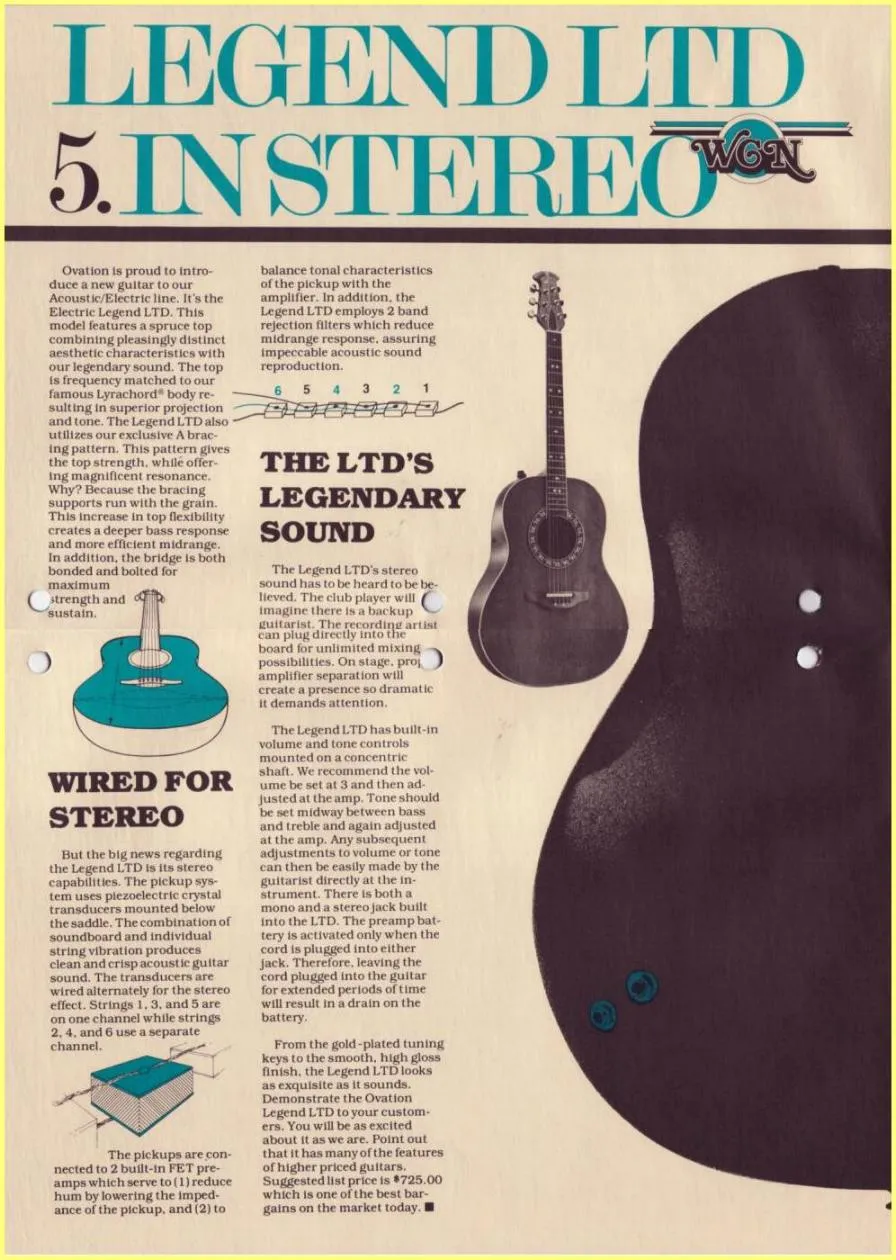
The guitar had separate tone and treble controls located on the same knob on the side by the neck. The back of the guitar had two input jacks, one labeled ‘Mono’ and one labeled ‘Stereo.’
The guitar weighed four and three-quarters pounds according to Ovation.
The 1980 Ovation catalog made a bold proclamation. “With each individual element picking up string vibration, and all of the elements picking up the warm, wood top vibration, the Ovation acoustic electric produces a sound like no other amplified acoustic guitar ever.”
Watch a video look inside the Ovation Legend Ltd. 1651. See a less detailed video about it.
Historical notes
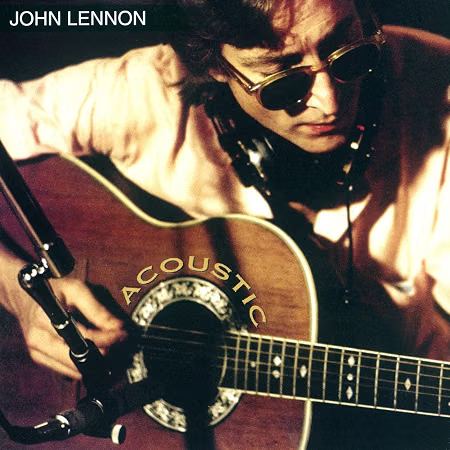
An image of Lennon playing the Ovation Legend Ltd. 1651 is on the front cover the John Lennon Acoustic album released November 1, 2004. The photo was taken by photographer David M. Spindel during the Double Fantasy sessions.
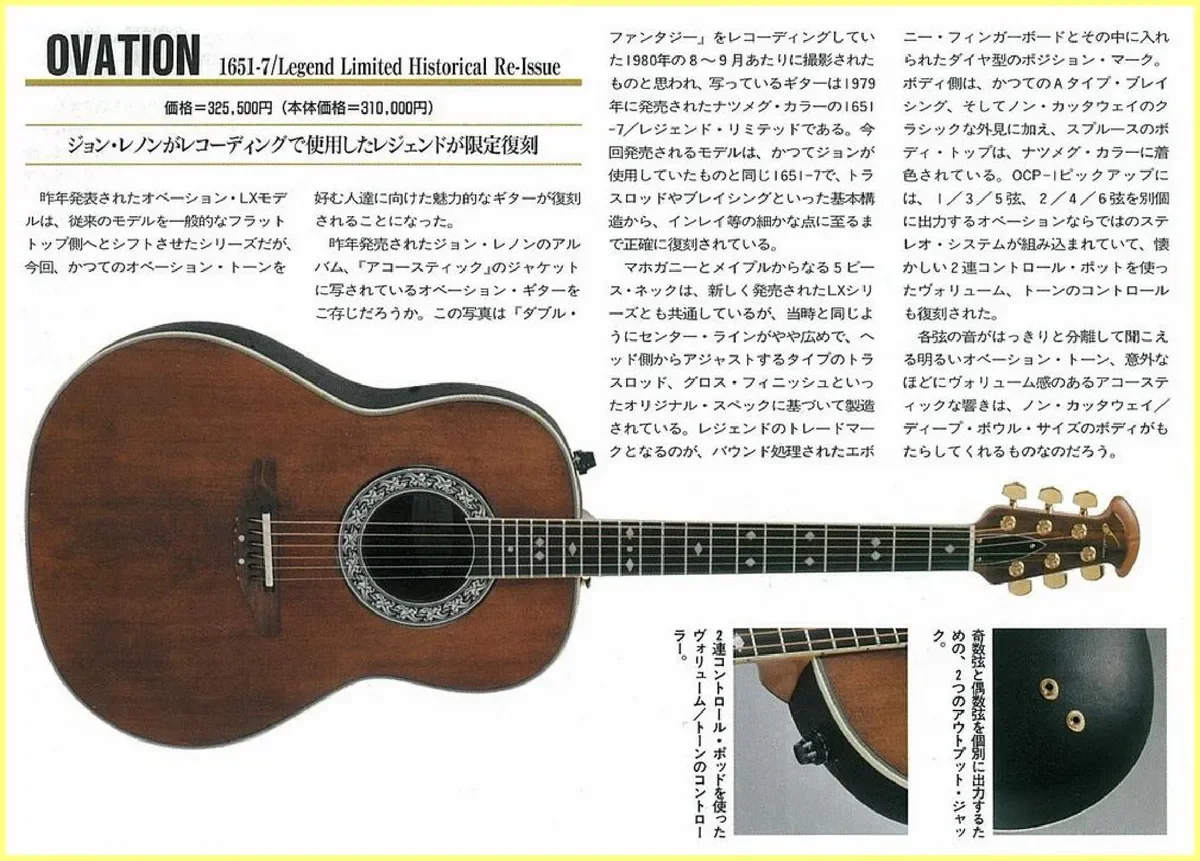
Ovation produced a limited run of 100 Ovation 1651 guitars in December of 2005 to commemorate the 25th anniversary of Lennon’s passing. These were mostly sold in Japan. A Japanese catalog from this time states (using Google Translate to go from Japanese to English, leaving as is):
Last year's John Lennon album, "Acoustic," was released. Do you recognize the Ovation guitar pictured on the album cover? This photo is of the "Double Fantasy” sessions. This photo is believed to have been taken around August or September of 1980, during the recording sessions for “Fantasy”. The guitar featured is a 1651-7 in "Nutmeg" color—a model released in 1979!
The model being released now is an exact reproduction of the 1651-7 once used by John, faithfully recreating everything from its fundamental construction—such as the truss rod and bracing—to finer details like the inlays.
The five-piece neck, crafted from mahogany and maple, shares its design with the newly released "L-series." It adheres to the original specifications, featuring a slightly wider center strip (just as in the original), a headstock-accessible truss rod, and a gloss finish. A hallmark of the "Legend" series is its bound ebony.
The fretboard features diamond-shaped position markers. The body design harks back to the classic, non-cutaway "A-style" aesthetic, with a spruce top finished in a "nutmeg" color. It incorporates a unique stereo pickup system—a hallmark of the original—that outputs the 1st, 3rd, and 5th strings separately from the 2nd, 4th, and 6th strings. The classic dual-ganged control pots for volume and tone have also been faithfully recreated.
The instrument delivers a bright, distinct tone where each string can be heard clearly and separately, while the non-cutaway, deep-bowl body provides a surprisingly robust acoustic resonance.
Unknown pawn shop acoustic guitar
Lennon forgot to bring a guitar with him on his sailing trip to Bermuda and subsequently went to a pawn shop in Newport, Rhode Island to buy one immediately before sailing.[6] He was holding the guitar when he boarded the boat.[7]
To my knowledge, there is no other detail available about this guitar. Additionally, Lennon never played the guitar while on the Megan Jaye.[8] The extent to which he might have used the guitar in Bermuda is unknown, though surely he would have strongly favored his Ovation 1651 once it arrived June 13th.
Sony CF-6500II
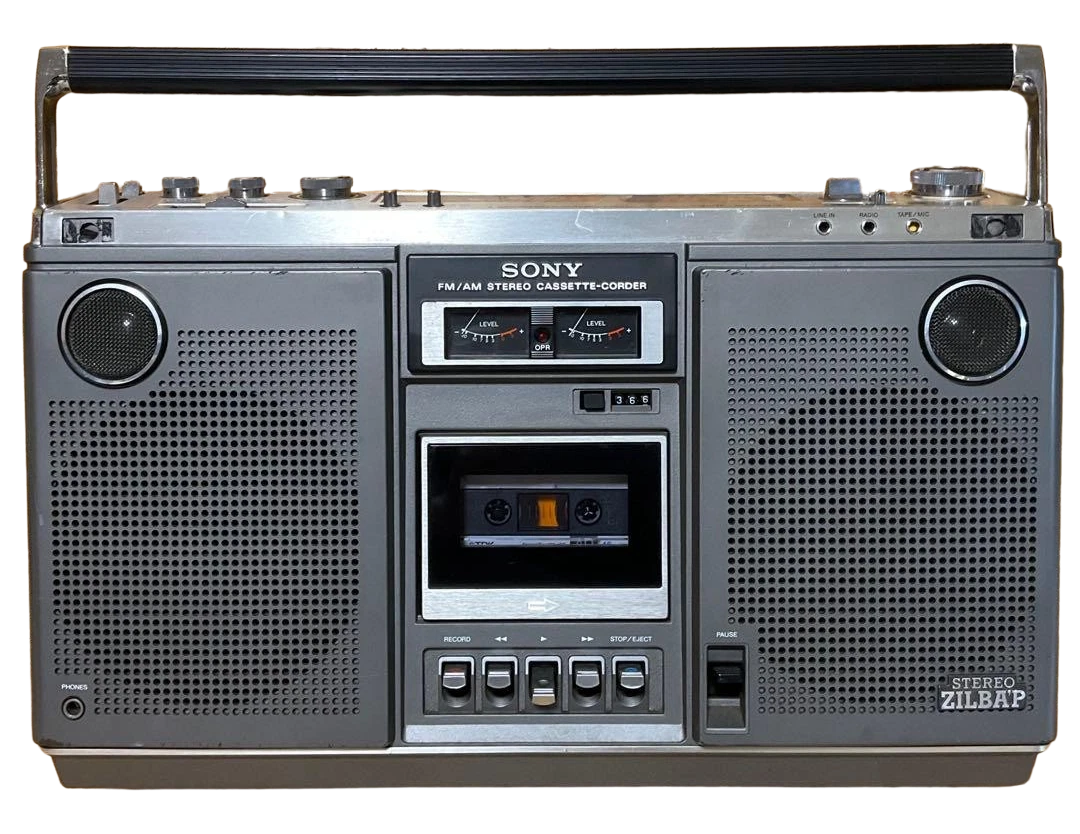
Soon after Lennon moved to the Undercliff cottage in the Fairyland neighborhood of Bermuda on June 18th 1980, he asked his assistant to buy a “top-of-the-line radio-cassette recorder.”[9] His assistant went to Stuart’s Electronics on Reid Street in Hamilton.
At Stuart’s, the assistant purchased a Sony CF-6500II boom box for approximately $275.[10] This would be the equivalent of about $1,100 today according to the U.S. Bureau of Labor Statistics.
This unit was referred to as the ZILBA’P, as these letters are on the bottom right of the unit. This stood for “Zoo Intelligence Learning Body Action Playing.”[11]
The ZILBA’P had an AM/FM stereo, a cassette player/recorder, and four built-in speakers. The speakers included two 16cm cone-type woofers and two 5cm cone-type tweeters.[12] The ZILBA’P also included a stereo microphone as well as multiple line input/output jacks and a headphone jack.
It was 18.7 inches long, 11.73 inches tall, and 5 inches deep. It weighed approximately 15 pounds, excluding batteries.
The ZILBA’P was portable, with a handle on top. It could be plugged in or operated via eight D batteries. Lennon used the ZILBA’P both for playing music and for recording during his time in Bermuda.[11]
Roland CompuRhythm CR-78
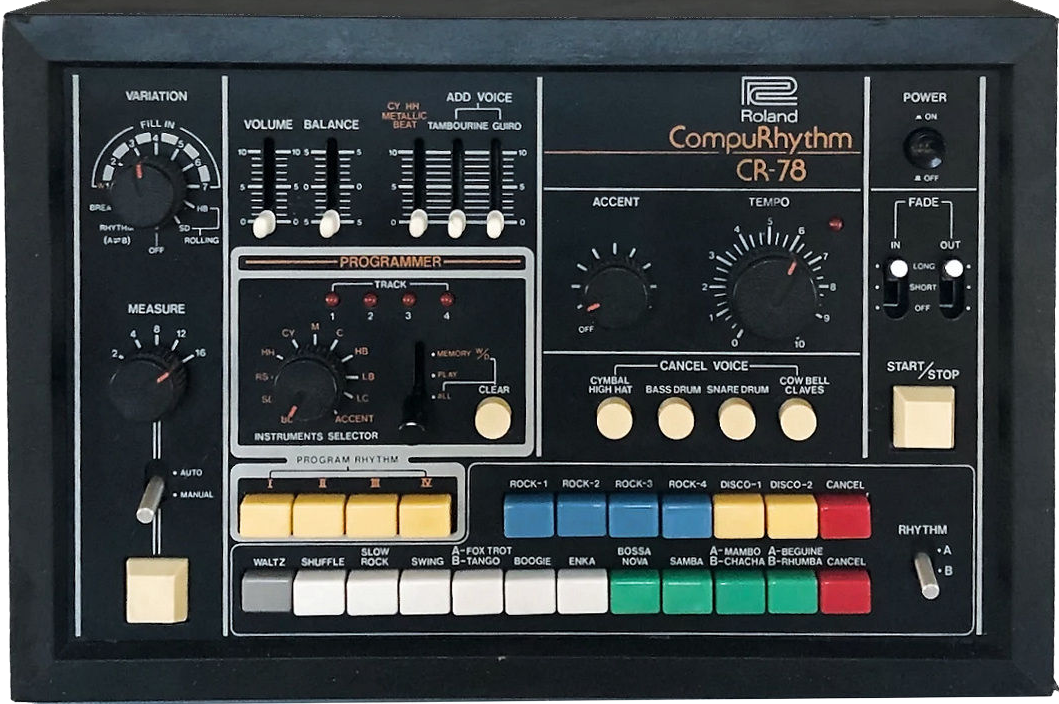
After a short period at Undercliff, Lennon had his Roland CompuRhythm drum machine sent from New York.[11]
The CR-78 was released in 1978. The CR in the name stands for CompuRhythm.
The CR-78 had 11 kinds of percussion instruments and 34 preset rhythm patterns. The former included bass drum, snare drum, rim shot, hi-hat, cymbal, maracas, claves, cow bell, high bongo, low bongo, and low conga. The latter included buttons for Rock (1-4), Disco (1-2), Waltz, Shuffle, Slow Rock, Swing, Fox Trot, Tango, Boogie, Enka, Bossa Nova, Samba, Mambo, Cha-cha, Beguine, and Rhumba.[13] These rhythm patterns could be combined. [14]
The CR-78 had an NEC microprocessor chip that allowed one to write, save, and replay custom patterns. However, this required a WS-1 programmer, which was sold separately.[14] (Read detailed information about how the CR-78 worked.)
The CR-78 was 11.8 inches wide by 11.0 inches deep by 8.1 inches high. It weighed 12.1 pounds.13 The system did not have its own amplification. It needed to be hooked up to an amplifier, stereo, or other another piece of equipment.
One reference states that Lennon was using a CR-68 model at this time.[15] However, from images of Lennon working in Bermuda, it is clear that it is actually the CR-78 model.
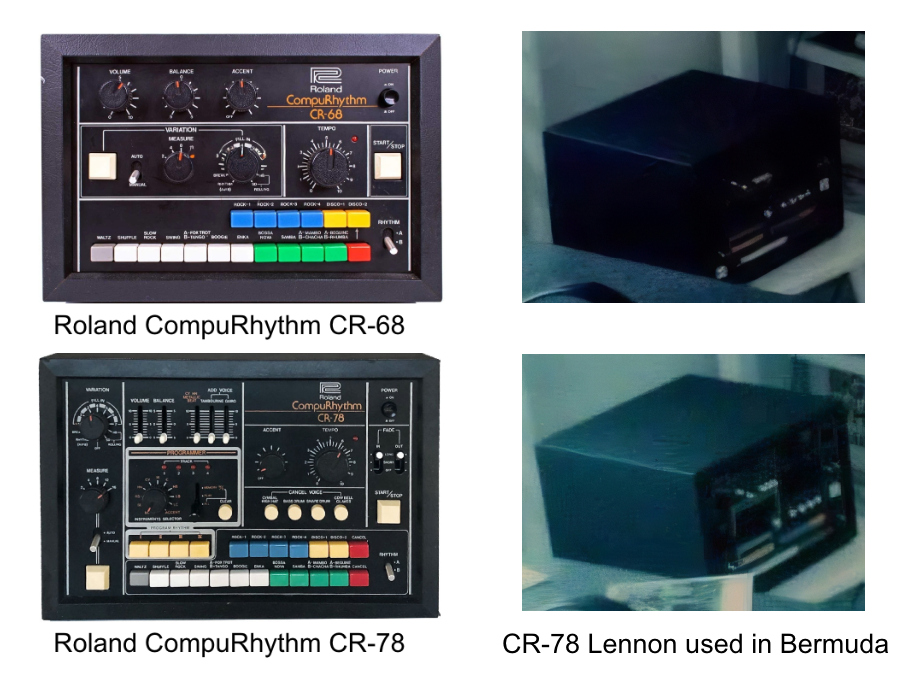
Note in the picture of Lennon in Bermuda, with the relevant section magnified here (Note: This was done using AI), there is one large white square button on the far right in the middle of the machine. To the left of that are four white nobs. Then slightly further left is another white nob. Above that, toward the middle, are additional white nobs. Finally, on the bottom far left, there is another large white square button.
All of that is consistent with the design of the CR-78. It is not consistent with the design of the CR-68, as shown in the side-by-side comparison. The latter has a series of black dials. There are no white nobs. Additionally, there is no large white button on the bottom left. Therefore, Lennon was clearly working with the Roland CR-78 CompuRhythm while in Bermuda, not the CR-68.
The CR-78 was a cutting edge piece of equipment. It was used in Blondie’s ‘Heart of Glass’ (1978), Phil Collin’s ‘In The Air Tonight’ (1980), and Hall & Oats ‘I Can’t Go For That (No Can Do)’ (1981).[14]
Panasonic RS-4360 DFT
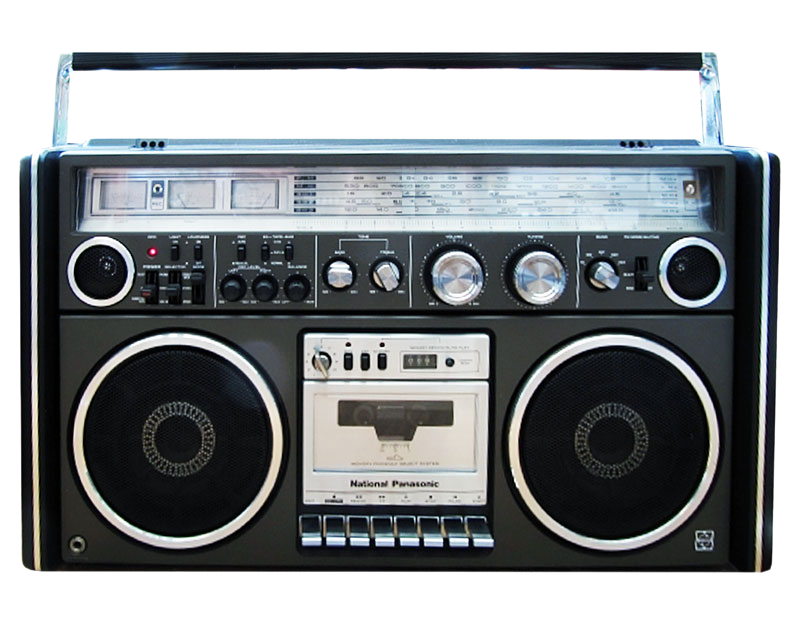
After beginning to work on songs, one morning in late June, Lennon decided he wanted to purchase a second cassette recorder so that he could double track his home demos. He planned to record on one cassette recorder and then play it back and record onto the second cassette recorder while he was singing and/or playing music.[16]
To accomplish this, Lennon and his assistant returned to Stuart’s. There, Lennon purchased a black and silver National Panasonic RS-4360 DFT tape recorder, along with headphones and blank cassette tapes.[17]
This unit was the export version of the RX-7700. The RS-4360 DFT came with an AM/FM stereo, a cassette recorder/player, four speakers (two 16 cm woofers and two 3 cm tweeters), stereo microphones, a tape counter, three built-in meters, external speaker jacks, line in/out jacks, a record player input, and external microphone jacks.
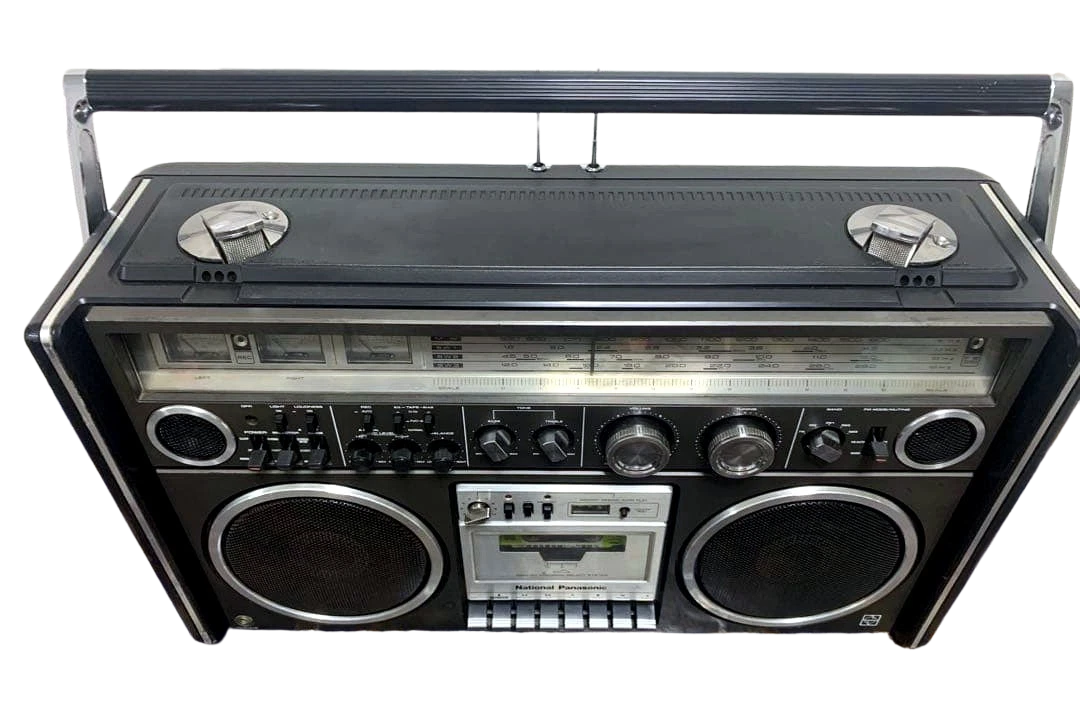
The unit had plenty of bells and whistles The stereo microphones on top of the unit flipped up with the press of a button. They could be used in a directional or non-directional fashion, with each microphone capable of swiveling. One could control the recording levels separately on the left and the right microphones. There were left-right meters as well. One could also control left and right recording levels and balance.
The RS-4360 DFT had tone controls for bass and treble. The unit could be played in a stereo, ‘stereo wide,’ or mono mode. There was also a memory rewind and auto-play, where it could rewind to a specific spot on the tape, stop, and then play. (See a video tour of this unit.)
The unit was 22 x 12.6 x 7.3 inches and weighed a whopping 24 and 5/8 pounds without batteries. With batteries (10 D-size), it would be a burly 28 pounds, approximately. It too had a handle for transportation.
It is unclear what the RS-4360 cost on release. However, it was obviously a considerably more expensive piece of equipment than the ZILBA’P. Again, it would likely have appealed to Lennon’s love of gadgetry.
An unknown amplifier
In images of Lennon in Bermuda, he had a small amplifier. Presumably this was sent down from New York to use with the CR-78, which did not have its own amplification. Alternately, it could have been used with the Ovation Legend Ltd 1651, which was acoustic electric. In the pictures, which all seem to be taken at the same time, the amplifier appears to be unplugged.
Steinway baby grand piano
Undercliff, the cottage where John Lennon stayed in Bermuda from June 18, 1980 until July 28th, had a Steinway baby grand piano.[18] However, it hadn’t been used in years and was likely out of tune.[19] The piano was located in the living room.[20] Lennon used the piano during his time at Undercliff, both for working on songs and for recording certain home demos.[21]
Setup
The ZILBA’P was, of course, easily portable, so Lennon could use it wherever he liked. The Panasonic RS-4360 DFT was also portable, though it was considerably heavier.
During his stay, Lennon moved his recording equipment to a spare room on the second floor.[22] In rare images from this time in Bermuda, Lennon can been seen with a music stand for his lyrics on a table. Behind that, on the same table, is the ZILBA’P. To the left of that is the Panasonic RS-4360 DFT. Then, on a separate table, lower down on the left, is the CompuRhythm CR-78. The amplifier Lennon is using is in the foreground. In some images, Lennon is holding his Ovation Legend Ltd. 1651 guitar.
[1] Seaman, Fred. The Last Days of John Lennon: A personal memoir. Birch Lane Press. 1991. p.143.
[2] Womack, Kenneth. John Lennon 1980 – The Last Days in the Life. Omnibus Press. 2020. p.120-121.
[3] Ovation Winners Circle News. Issue No. 2, 1979.
[4] Womack. John Lennon 1980 – The Last Days in the Life. p. 76.
[5] Features and Benefits of the 4 Major Components. Ovation. 1980s.
[6] Neil, Scott. Lennon Bermuda. Freisenbruch Brannon Media. Kindle Edition. p. 19.
[7] Neil. Lennon Bermuda. p. 20.
[8] Neil. Lennon Bermuda. p. 33.
[9] Seaman. The Last Days of John Lennon: A personal memoir. p.156-157.
[10] Womack. John Lennon 1980 – The Last Days in the Life. p.123.
[11] Womack. John Lennon 1980 – The Last Days in the Life. p. 124.
[12] Sony CF-6500II ZILBA’PmkII. Audio-heritage.jp. Google Translate was used to translate from Japanese to English.
[13] Roland CompuRhythm CR-78 Owner’s Manual.
[14] CR-78: The whole story. Roland.com. September 12, 2023.
[15] Womack. John Lennon 1980 – The Last Days in the Life. 2020. p.39.
[16] Seaman. The Last Days of John Lennon: A personal memoir. p.167.
[17] Womack. John Lennon 1980 – The Last Days in the Life. p.127.
[18] Neil. Lennon Bermuda. p.52.
[19] Seaman. The Last Days of John Lennon: A personal memoir. p.155.
[20] Seaman. The Last Days of John Lennon: A personal memoir. p.150.
[21] Seaman. The Last Days of John Lennon: A personal memoir. p.160
[22] Seaman. The Last Days of John Lennon: A personal memoir. p.170.